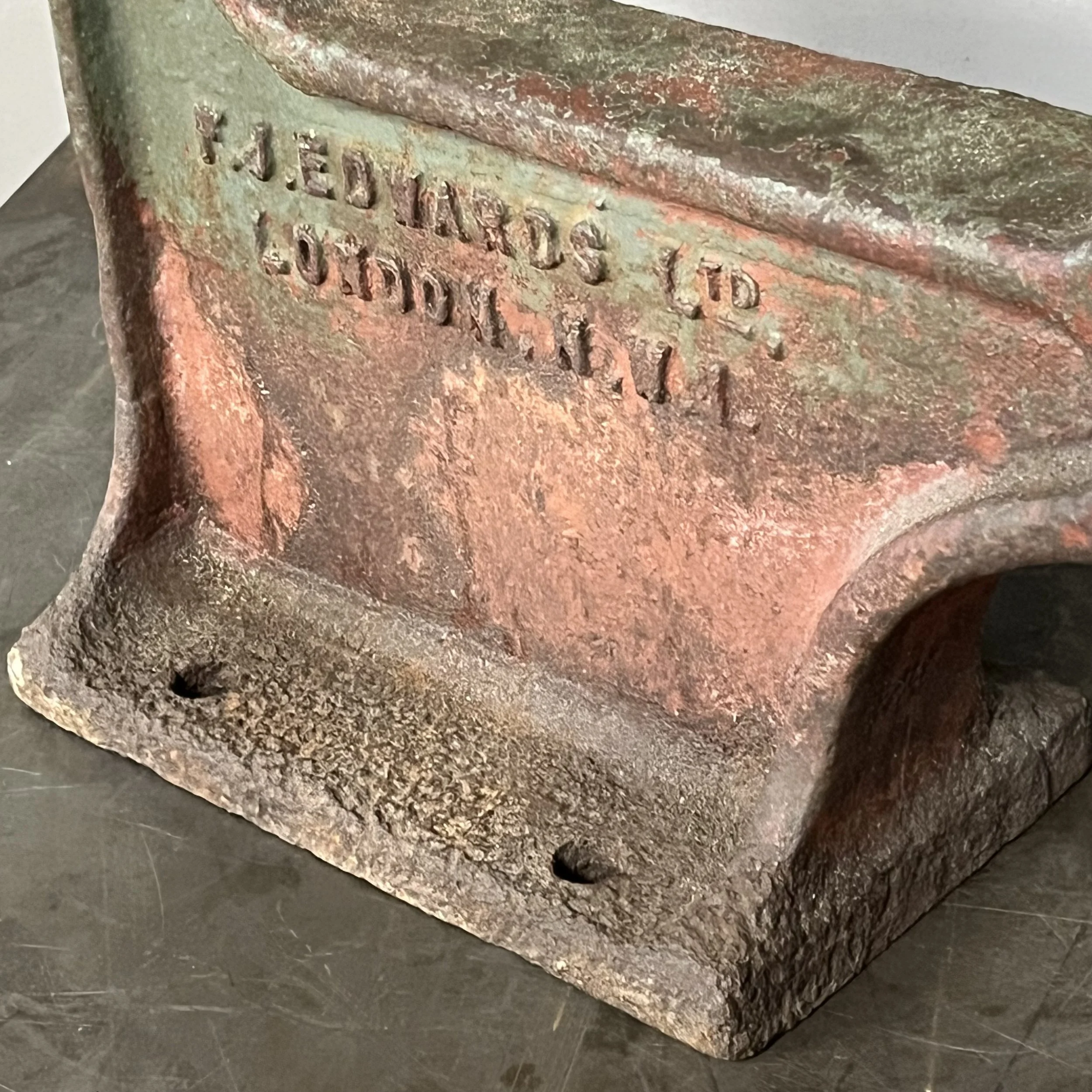
F.J. Edwards Bench Wheeling & Raising Machine
Conservation Record No. 001
Manufacturer: F.J. Edwards Ltd., London, N.W.1., England
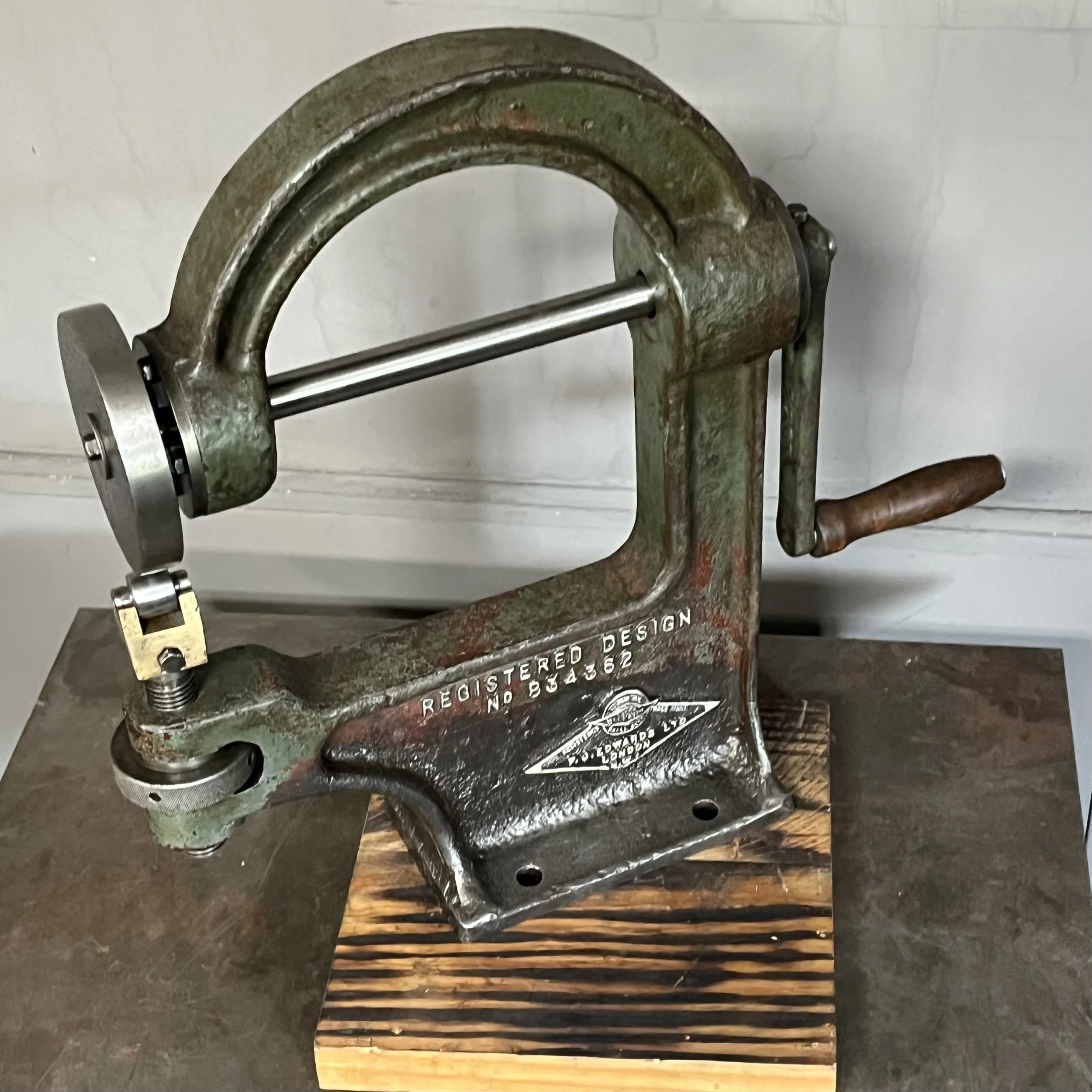
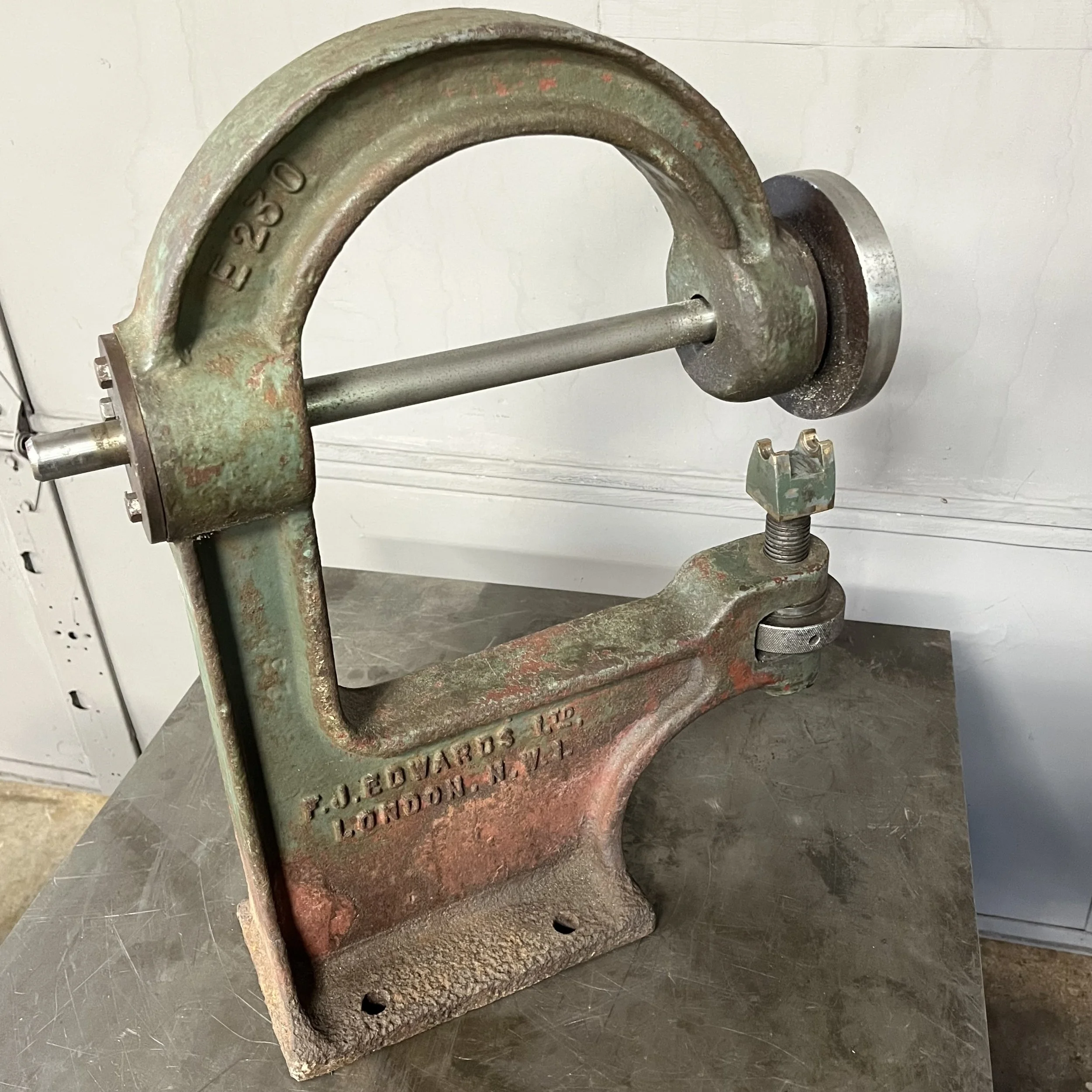
Machine Type: Bench Wheeling & Raising Machine
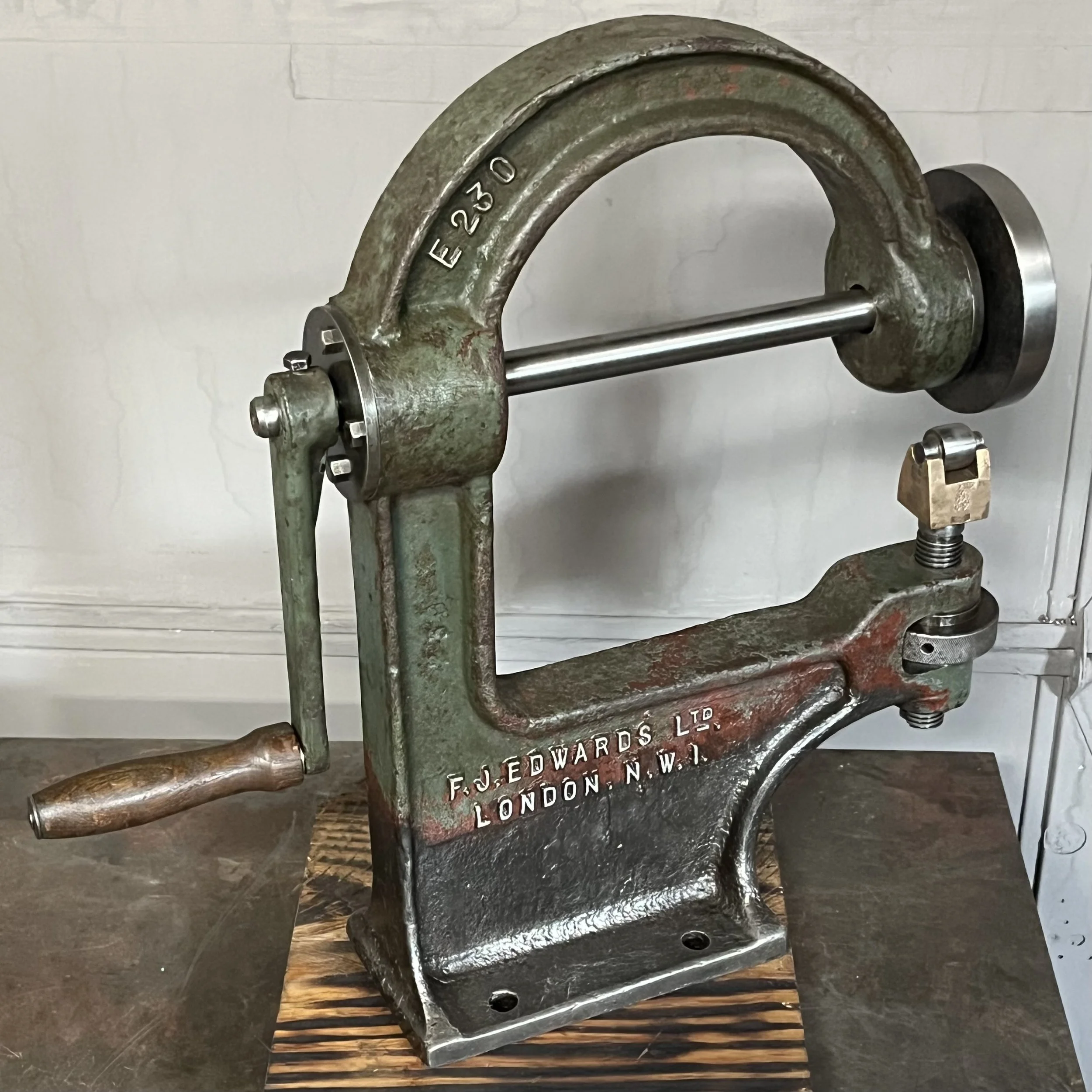
Model: E230 (casting designation)
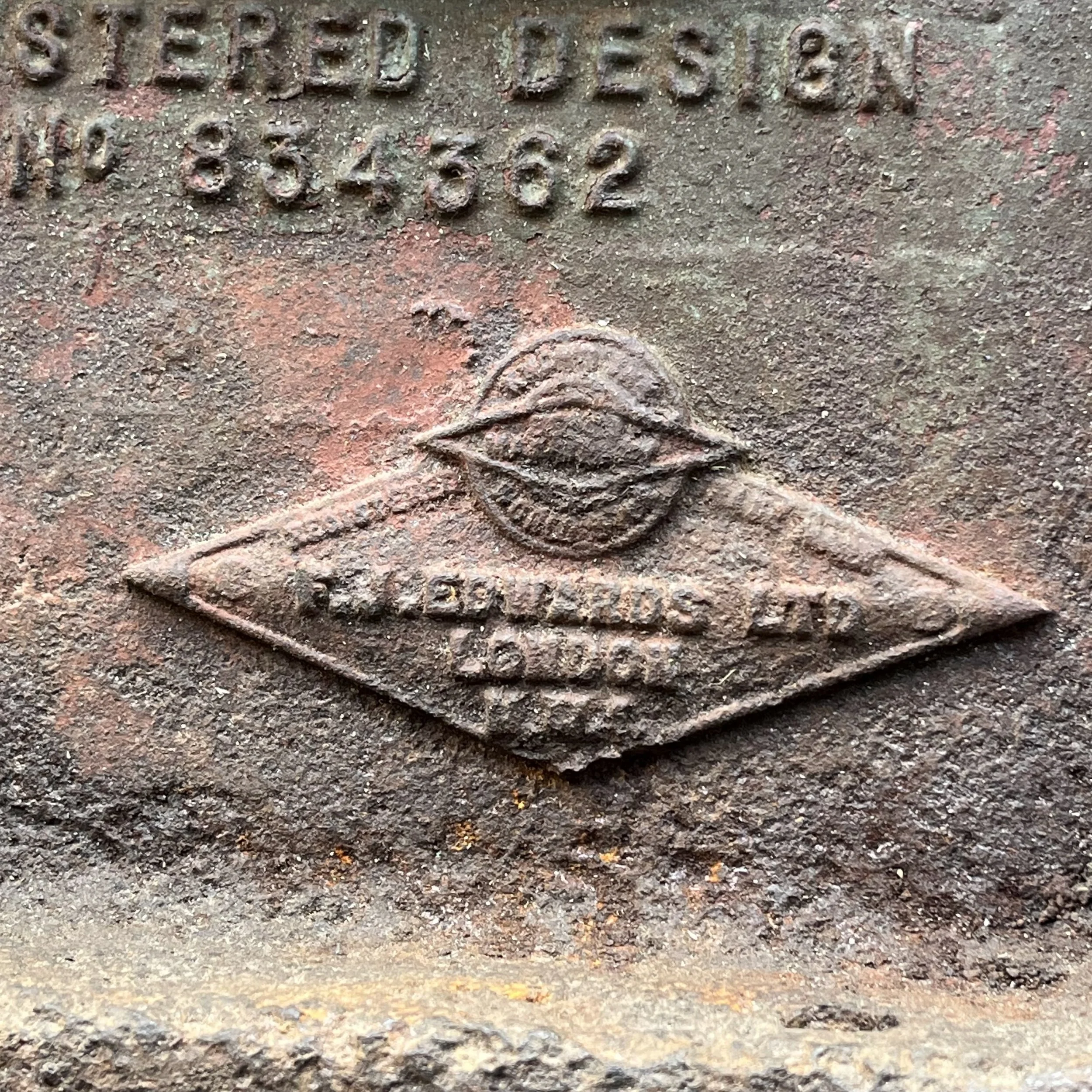
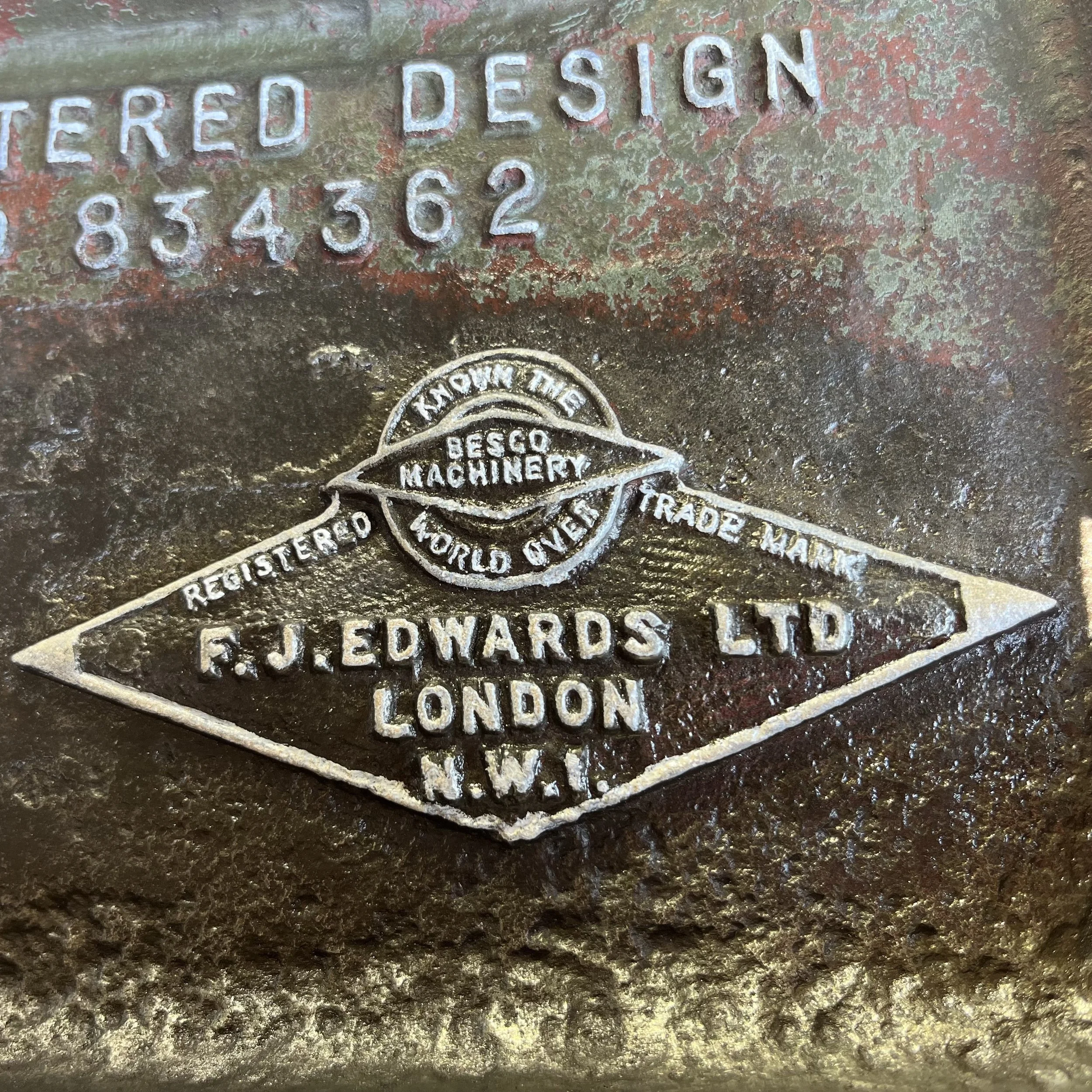
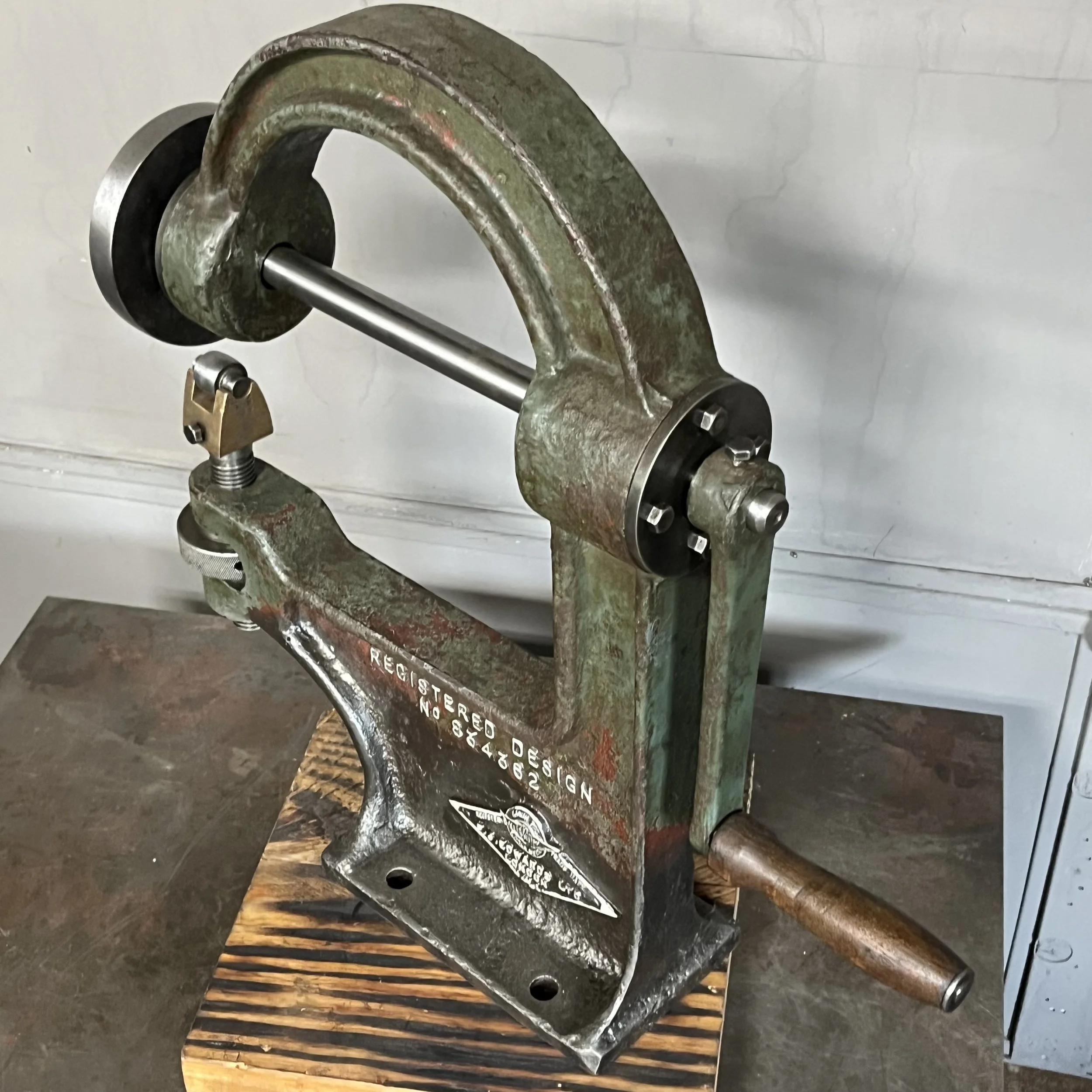
Registered Design: No. 834362
Estimated Date: c. 1938–1948
Historical Background
F.J. Edwards Ltd. was a respected British manufacturer of professional sheet-metal machinery serving tinsmiths, coachbuilders, aircraft fabricators, and other skilled trades. Their equipment earned a reputation for robust construction and practical design.
This bench wheeling and raising machine was designed for precision shaping, smoothing, wheeling, and raising of smaller sheet-metal workpieces. Research completed during this restoration indicates that surviving examples are uncommon, making this machine both a functional workshop tool and an important artifact of British industrial history.
Condition Upon Arrival
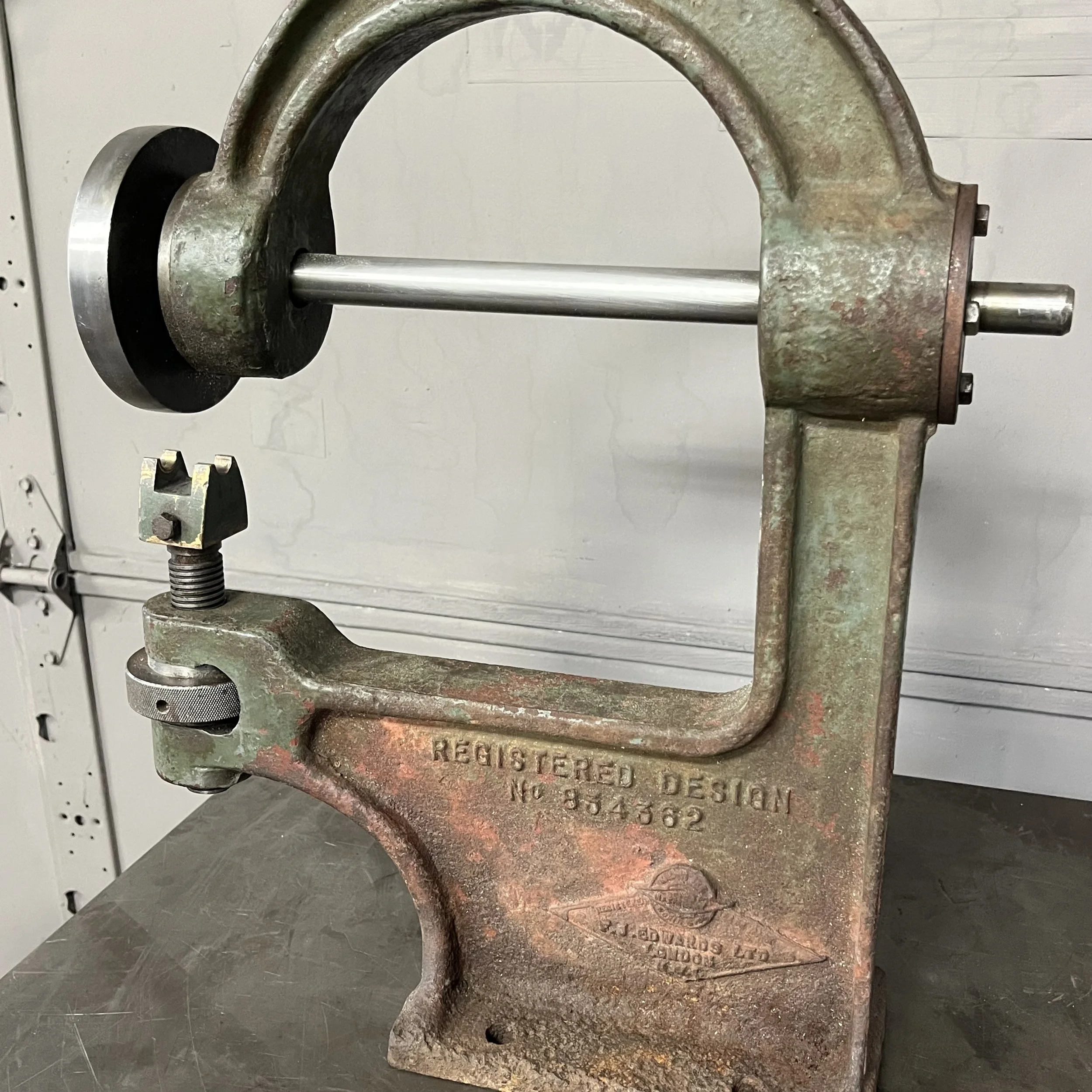
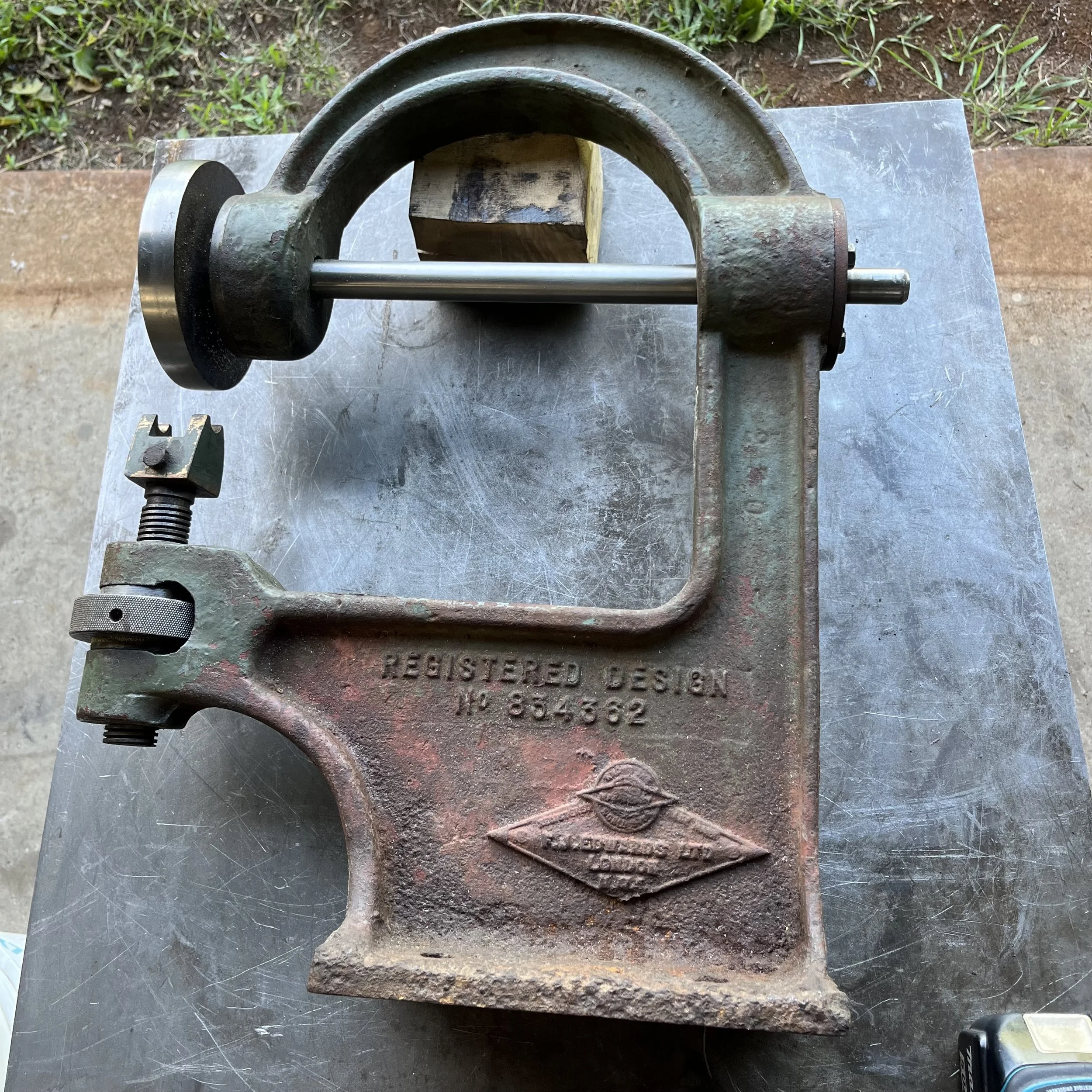
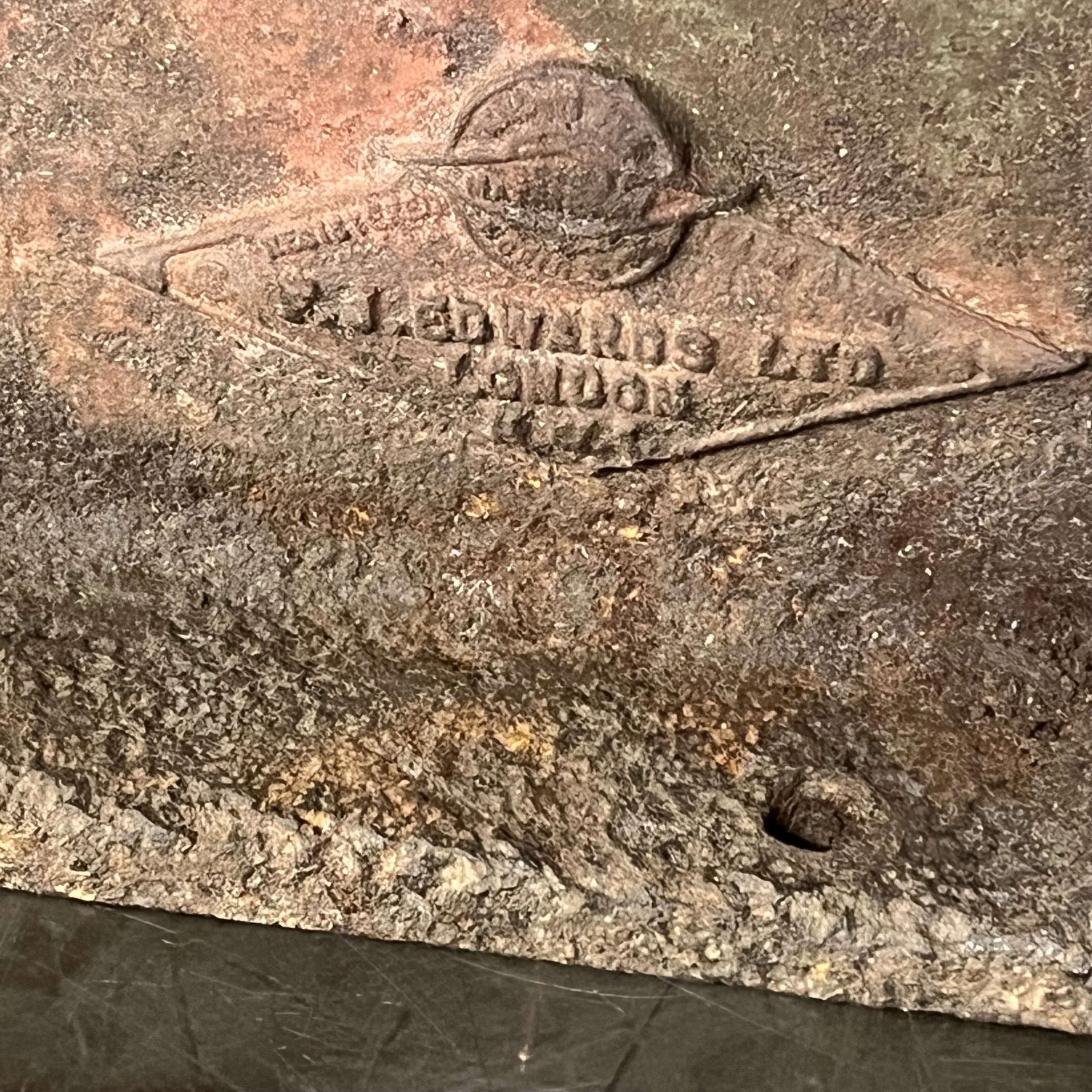
The machine was mechanically complete upon arrival. Original green paint over red oxide primer remained across much of the casting. Surface corrosion was concentrated around the base and exposed steel components. The original bearings contained aged blue grease but exhibited no measurable radial or axial play. One bearing-cap bolt was missing. Paint obscured the original brass lower roller carrier, and corrosion partially concealed the raised F.J. Edwards lettering. No structural cracks, weld repairs, or broken castings were observed
Restoration Objectives
The objective was to preserve the machine's originality while returning it to dependable mechanical service. Conservation was favored over cosmetic restoration, retaining original finishes, hardware, bearings, machining marks, and evidence of honest use whenever practical.
Mechanical Assessment
Disassembly confirmed the machine to be structurally sound. The rollers, shafts, threads, adjustment mechanism, and cast frame remained in excellent mechanical condition. The original bearings cleaned well and, after inspection, were retained due to the absence of measurable wear or looseness.
· Disassembly, inspection, and cleaning.
· Careful corrosion remediation while preserving surviving factory paint.
· Cleaning, inspection, and preservation of the original bearings.
· Removal of aged grease and relubrication with Super Lube synthetic grease.
· Replacement of the missing bearing-cap bolt using a period-appropriate plain steel bolt aged with vinegar, cold blue, and steel wool to visually match the original hardware.
· Removal of paint from the original brass lower roller carrier.
· Cleaning and preservation of original cast surfaces.
· Recovery and highlighting of the raised F.J. Edwards lettering.
· Final lubrication of working components and protection of cast surfaces with boiled linseed oil.
Conservation Decisions
Original paint was intentionally preserved rather than replaced. The original bearings were retained because their condition did not justify replacement. Original hardware was reused wherever possible, and replacement hardware was limited to what was necessary for completeness. The goal was not to make the machine appear new, but to preserve its authenticity while ensuring reliable operation.
Historical Research
Research confirmed the manufacturer and identified Registered Design No. 834362. Additional investigation into Edwards and Besco machinery suggests this bench machine belongs to a specialized family of professional sheet-metal equipment. While original literature for this exact machine has not yet been located, the available evidence indicates it is an uncommon surviving example. Research remains ongoing as additional archival material and collector information become available.
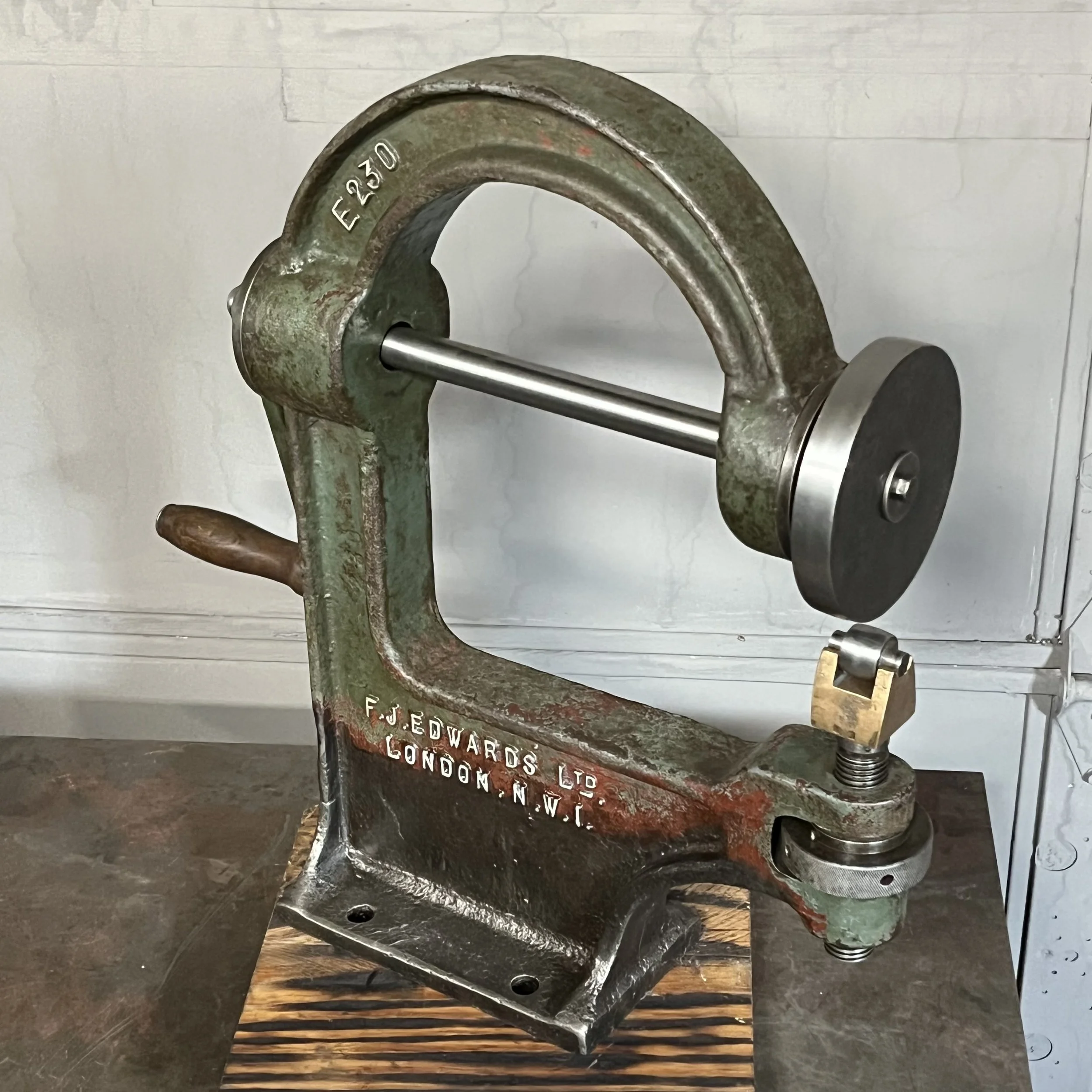
Finished Machine
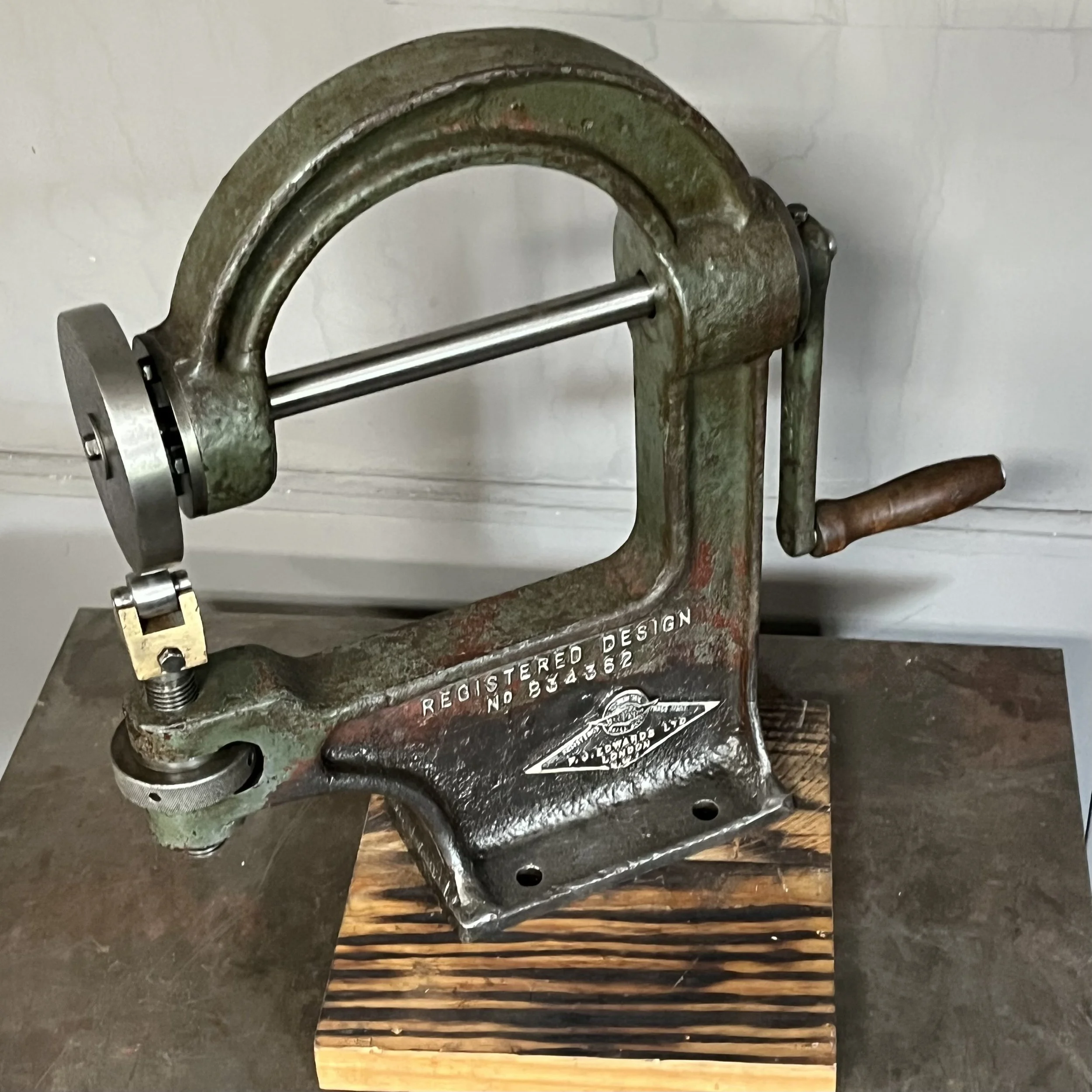
Work Performed
Final Assessment
This restoration returned the machine to smooth mechanical operation while preserving the characteristics that define an authentic F.J. Edwards wheeling and raising machine. Original paint, bearings, rollers, castings, and machining marks remain intact wherever practical. The completed machine presents as a carefully conserved historic working tool ready for many more decades of service.