

Carbon Steel Knife Care
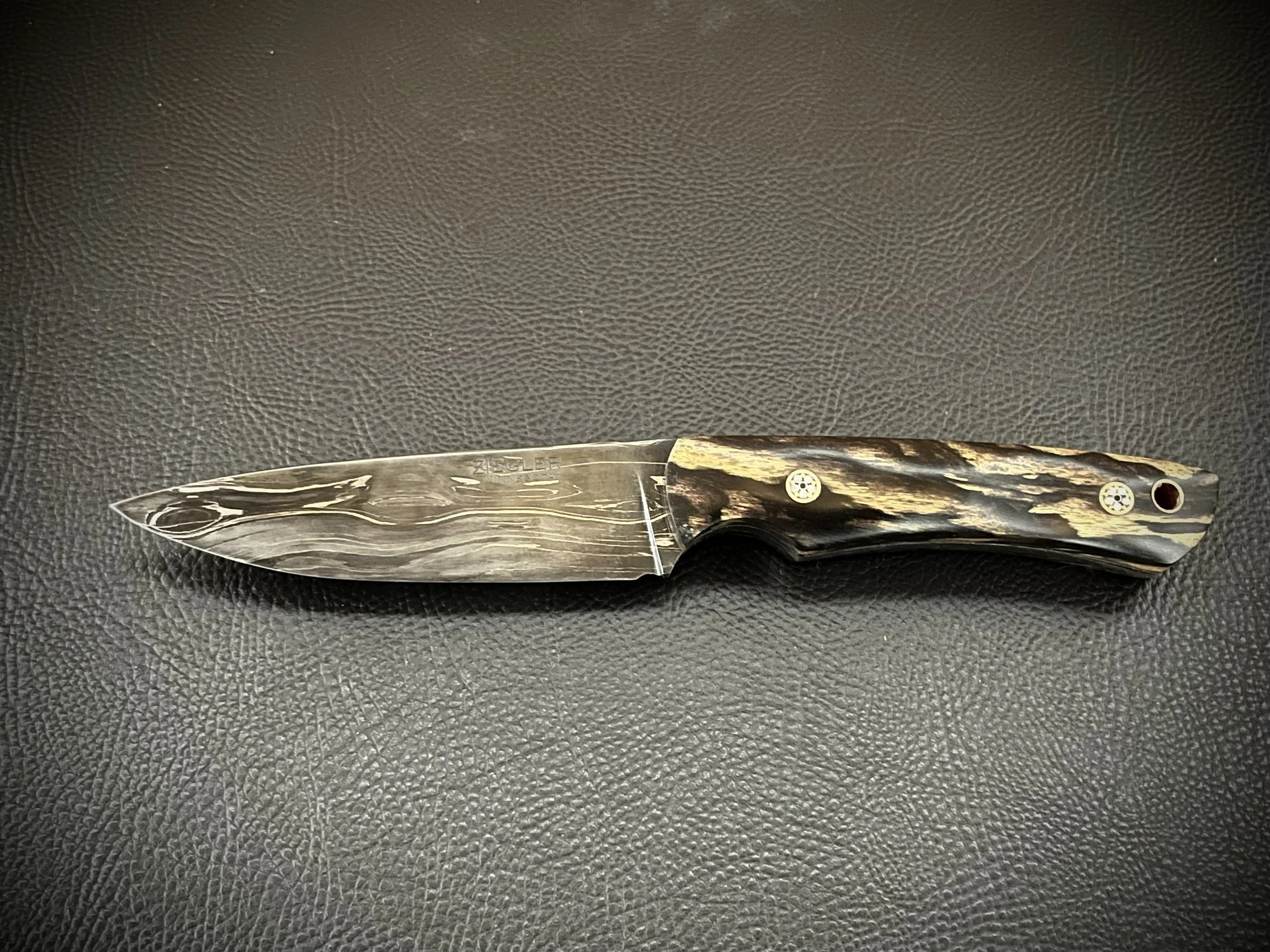
Built to Last a Lifetime
A handcrafted carbon steel knife is more than just a cutting tool—it's a tool designed to work hard, develop character, and last for generations. Unlike stainless steel, carbon steel rewards a little extra care with exceptional sharpness, outstanding edge retention, and unmatched performance.
Every knife from Deadmoose Forge is built to be used. The more you use it, the more unique it becomes.
Why Carbon Steel?
Professional chefs, outdoorsmen, hunters, woodworkers, and knife enthusiasts have trusted carbon steel for generations because it offers:
Exceptional sharpness
Outstanding edge retention
Easy sharpening
Toughness and durability
A beautiful natural patina that tells the story of the knife
The tradeoff is simple: carbon steel requires basic maintenance to prevent rust.
Fortunately, caring for your knife only takes a few seconds.
Daily Care
After each use:
Wash with warm water and a mild dish soap.
Rinse thoroughly.
Dry immediately with a clean towel.
Never allow your knife to air dry.
Moisture is the enemy of carbon steel.
Protecting Your Blade
Your knife leaves my shop protected with Pelican Paste, a food-safe blend that helps protect both the blade and the handle.
As the knife is used and cleaned, this protective coating will gradually wear away.
I recommend periodically applying:
Pelican Paste
Axe Wax
Food-grade mineral oil
Unscented baby oil
Camellia oil
A light coat is all that's needed.
Storage
Proper storage is just as important as proper cleaning.
Recommended
Knife block
Magnetic knife strip
Dry drawer with blade protection
Avoid
Leather sheaths for long-term storage
Plastic sleeves that trap moisture
Wet countertops
Sink edges
Damp drawers
Never store knives with the cutting edges rubbing together.
Never Put Your Knife in the Dishwasher
Dishwashers are one of the quickest ways to ruin a handmade knife.
The combination of heat, moisture, harsh detergents, and contact with other utensils can damage the blade, dull the edge, stain the steel, and crack or warp natural handle materials.
Always wash your knife by hand.
Understanding Patina
One of the best parts of owning a carbon steel knife is watching it develop a natural patina.
A patina is a stable oxide layer that forms naturally as the blade reacts with food and the environment.
Unlike orange rust, patina actually helps protect the steel.
Every knife develops its own unique appearance over time.
Foods That Influence Patina
Cooked meats
Often produce beautiful blue tones.
Onions, cabbage, bananas, artichokes, rhubarb
Usually create dark blue or nearly black coloration.
Lemons, strawberries, citrus, pineapple, tomatoes
Quickly produce gray to black patina.
No two knives age exactly alike.
Rust vs. Patina
Good Patina
Gray
Blue
Charcoal
Black
Smooth
Even coloration
This is completely normal.
Bad Rust
Orange
Red
Powdery
Rough texture
Remove orange rust as soon as it appears.
Removing Rust
If orange rust develops:
Wash and dry the knife.
Use the scrub side of a sponge to gently remove the rust.
If necessary, make a paste using baking soda and water.
For stubborn spots, use a Rust Eraser.
Dry thoroughly.
Apply a light coat of oil or Pelican Paste.
Removing rust early prevents permanent pitting.
Sharpening
Carbon steel is one of the easiest knife steels to sharpen.
Maintain the edge with:
Whetstones
Ceramic honing rods
Leather strops
Avoid inexpensive pull-through sharpeners whenever possible, as they remove unnecessary material and can damage the edge geometry.
Designed to Be Used
Your knife was never intended to sit in a display case.
It was built to prepare meals, process game, carve wood, and become part of your everyday life.
Every scratch, every patina mark, and every sharpening tells part of its story.
With proper care, your knife from Deadmoose Forge will provide decades of dependable service—and one day, it may become a family heirloom.
Thank you for supporting American craftsmanship.
— Zeke Ziegler
Deadmoose Forge
www.deadmooseforge.com